OpenAI Speech-to-Text and Whisper: How They Work
Understand the difference between OpenAI’s hosted speech-to-text API and Whisper, the open-source speech-recognition model, plus when each approach makes sense.
“OpenAI speech-to-text” and “Whisper” are related but not interchangeable terms. Whisper is OpenAI’s open-source speech-recognition model and codebase; OpenAI also offers hosted transcription models through its API. The first is a model you can run or build around, while the second is a cloud API developers can call.
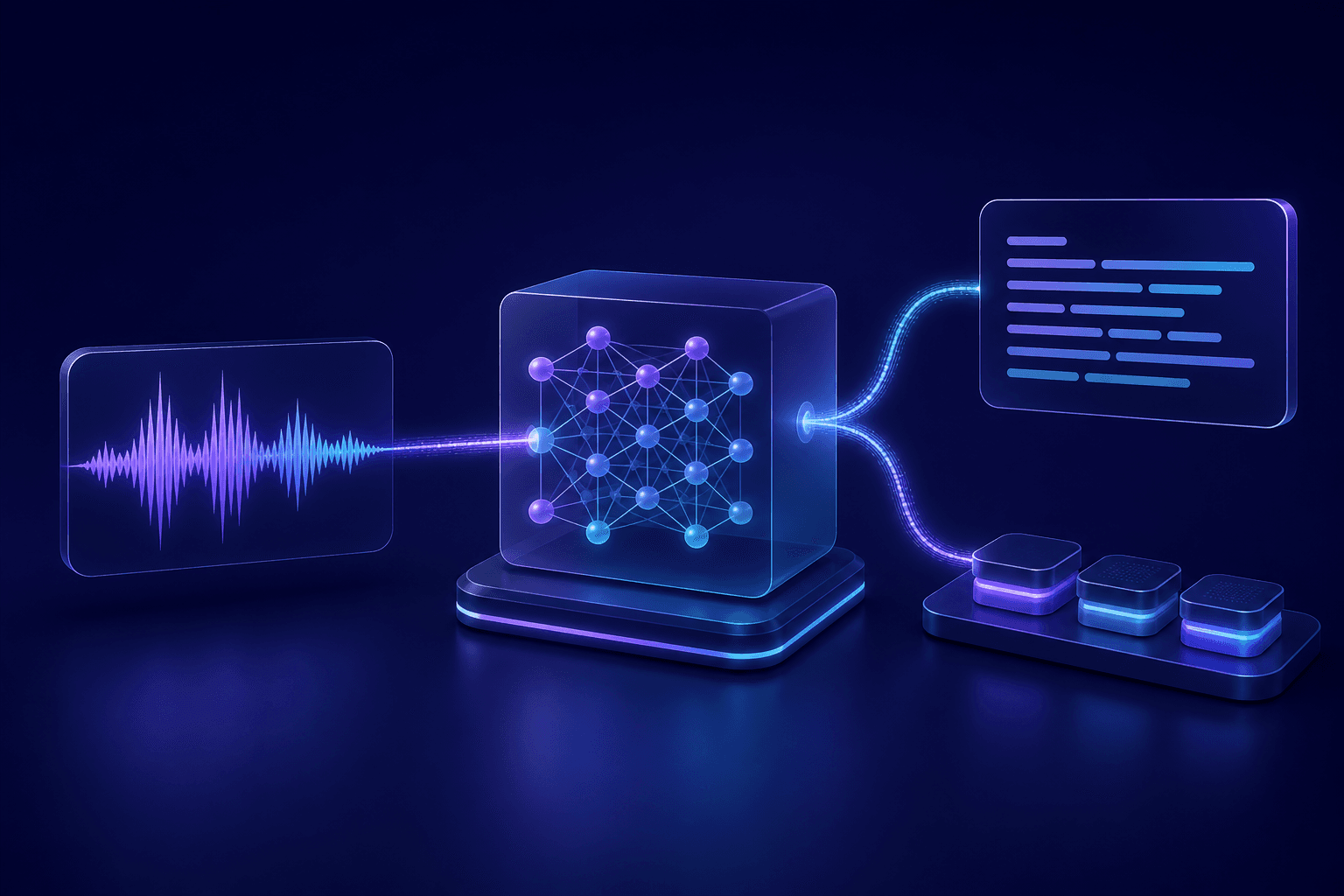
What Whisper is
The official Whisper repository describes it as a general-purpose speech-recognition model that can perform multilingual speech recognition, speech translation, and language identification. Running it yourself requires an environment for the model, its dependencies, audio preparation, and enough compute for the chosen workflow. The Whisper repository is the primary source for the open-source project.
What the hosted OpenAI API is
The hosted route replaces local model operations with an API request: a developer sends audio and receives a transcription response. OpenAI’s current audio API includes transcription models and a diarization-capable transcription model; model availability and response options change over time, so consult the OpenAI audio API reference when planning an integration.
Who should use which?
A team that wants to control its own environment may explore the open-source Whisper project. A team that wants a managed integration may use the hosted API. Both choices require development work to accept files, make requests or run inference, handle results, and build the experience around the transcript.
The self-hosting trade-off
Running an open-source model locally or on your own infrastructure can give a team control over its runtime and deployment decisions. It also means owning model installation, compute capacity, upgrades, observability, and the application behavior around the result. A hosted API shifts the model-serving layer to the provider, but the product integration is still the team’s responsibility.
When Whisper or the OpenAI API makes sense
They make sense for developers choosing a recognition layer for software they are building—whether that means a self-managed model environment or a hosted API integration. Neither choice automatically supplies upload screens, file organization, review, or export. If you simply need a recording turned into a usable transcript, Senite transcription is a ready-to-use application path. How AI transcription works explains where recognition and speaker separation fit in the wider workflow.
Back to all articles